From Japandi minimalism to climate-smart materials, these are the 10 interior design trends reshaping Chennai homes in 2025, based on data from over 200 HomeOne projects this year.
What Is Driving Design Trends in Chennai in 2025?
Chennai homeowners in 2025 are designing differently from five years ago. Two forces are reshaping every project: the post-pandemic need for homes that work for both living and remote work, and a growing awareness that interior materials must perform in Chennai's heat and humidity. The trends below are not aesthetic whims. Each one solves a real problem for Chennai families while looking extraordinary.
1. Japandi Minimalism for Chennai Homes
Japandi, the fusion of Japanese minimalism and Scandinavian warmth, has become the dominant style choice in Chennai apartments. Natural teak surfaces, muted off-white walls, and rigorously clutter-free layouts deliver a low-maintenance aesthetic that performs well in Chennai's climate. Japandi interiors use fewer materials to greater effect: solid wood joinery with clean grain, linen-textured cushions, and handmade ceramic accessories replace ornate carved furniture and layered pattern mixing.
- Key materials: teak, ash wood, natural linen, jute
- Colour palette: warm white, soft beige, charcoal, warm grey
- Furniture profile: low platform beds, slim-leg side tables, unadorned cabinets
- Works best in: north and west-facing apartments with consistent indirect light
2. Warm Earth Tones Replace All-White Interiors
The all-white interior era is definitively over in Chennai. Terracotta, warm ochre, sage green, and dusty rose are replacing crisp white as the dominant wall colour choice. These tones feel cooler in Chennai's afternoon heat while creating an intimate, layered atmosphere that photographs beautifully for Instagram and real estate listings alike. The shift matters practically: warm earth tones hide Chennai's dust better than white and require repainting less frequently.
HomeOne tip: Warm earth tones work best with natural light. North-facing rooms in Chennai benefit most from terracotta and ochre. South-facing rooms can handle the full depth of a deep sage or dusty blue without feeling dark.
3. Fluted Panels and Ribbed Textures Everywhere
Fluted MDF panels are the single fastest-growing design element HomeOne sees in 2025 projects. Used on TV units, kitchen islands, wardrobe shutters, and even bathroom walls, they add architectural depth and shadow play to any flat surface without additional cost. A plain wardrobe becomes a feature wall. A basic TV unit becomes a design statement. The cost premium over flat panels is Rs.150 to Rs.400 per sqft, making it one of the highest-impact, lowest-cost upgrades available.
4. Smart Storage as the Primary Design Driver
Chennai apartments are getting smaller even as families grow. In 2025, the most intelligently designed homes hide storage inside staircases, within false ceiling pelmets, beneath platform beds, and above refrigerators. The discipline of hidden storage is not optional in a 1,000 sqft Chennai home; it is the difference between a home that feels designed and one that feels cluttered regardless of how premium the materials are.
- Staircase storage: pull-out drawers under every tread, ideal for 3BHK duplex projects
- False ceiling pelmet: conceals curtain track and provides hidden LED cove channel
- Platform bed storage: full-length hydraulic lift base adds 40 sqft of hidden storage
- Above-fridge cabinet: closes the kitchen gap, adds 1.5 sqft of pantry space per unit
5. Statement False Ceilings with Integrated Lighting
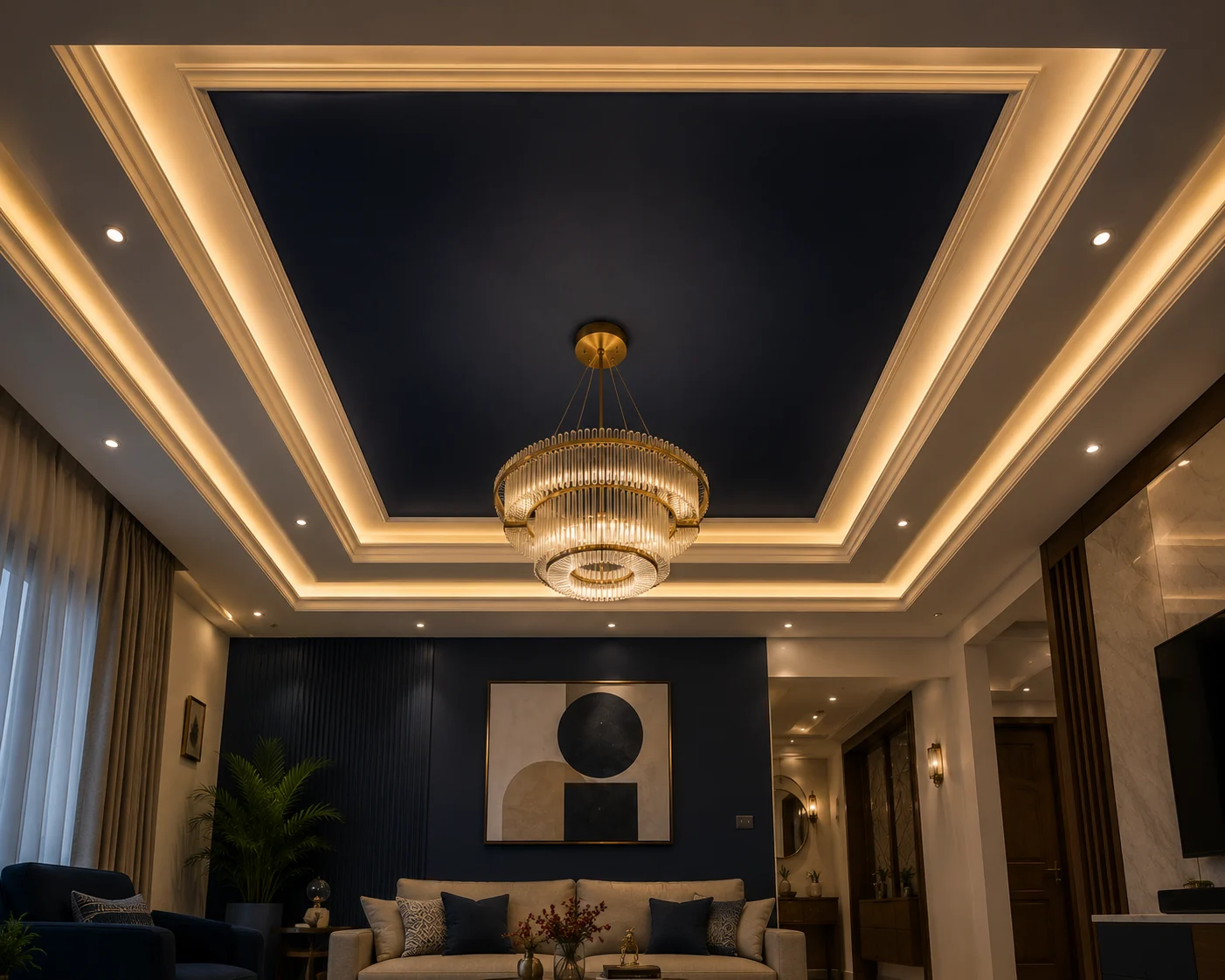
False ceilings have moved beyond plain gypsum boxes with a central fan. Cove lighting, perforated metal panels, wooden batten arrays, and backlit stretch fabric are giving Chennai living rooms a hotel-quality atmosphere at residential budgets. The most popular current configuration: a flat gypsum field with a recessed cove at the perimeter and a floating island over the seating zone, with warm-white LEDs at 2,700K highlighting the transition.
6. Biophilic Design and Indoor Green Walls
Indoor plants were a pandemic coping mechanism. In 2025 Chennai, they are a structural design element with their own budget line. Vertical green walls, preserved moss panels, and planter-integrated TV units appear in 1 in 4 HomeOne projects. The reasons are practical as well as aesthetic: plants reduce indoor temperature by 1 to 2 degrees in enclosed Chennai spaces, improve air quality in sealed air-conditioned rooms, and are the one interior element that signals genuine care for the home.
7. Modular Furniture that Reconfigures for Work and Life
With Chennai professionals increasingly working from home, convertible furniture that shifts from work to dining to sleeping configuration is mainstream. Murphy wall beds with integrated fold-out desks convert a bedroom to a home office in 30 seconds. Extendable dining tables seat two daily and twelve for Diwali. Modular sofa units reconfigure from L-shaped to straight to accommodate different social configurations. HomeOne now designs every 2BHK with at least one convertible furniture piece as standard.
8. Microcement and Polished Concrete Look
Microcement applied over kitchen counters, bathroom floors, and occasional living room feature walls gives an industrial-chic aesthetic at a fraction of marble's cost. It is seamless (no grout lines), heat-resistant up to 80 degrees Celsius, and easier to maintain in Chennai's humid kitchen environment than porous natural stone. The cost for microcement counter application is Rs.180 to Rs.280 per sqft, compared to Rs.300 to Rs.600 for granite and Rs.500 to Rs.1,200 for marble.
9. Arched Doorways and Curved Forms
Hard 90-degree corners are softening. Arched niches in living rooms, curved partition walls between dining and kitchen, round ottomans replacing rectangular coffee tables, and semicircular headboard walls in master bedrooms are bringing organic forms back into Chennai home design. The trend is particularly visible in luxury apartments in Nungambakkam, Besant Nagar, and Adyar, where architects and interior designers are working collaboratively on the same brief.
10. Brass and Black Hardware as Signature Accents
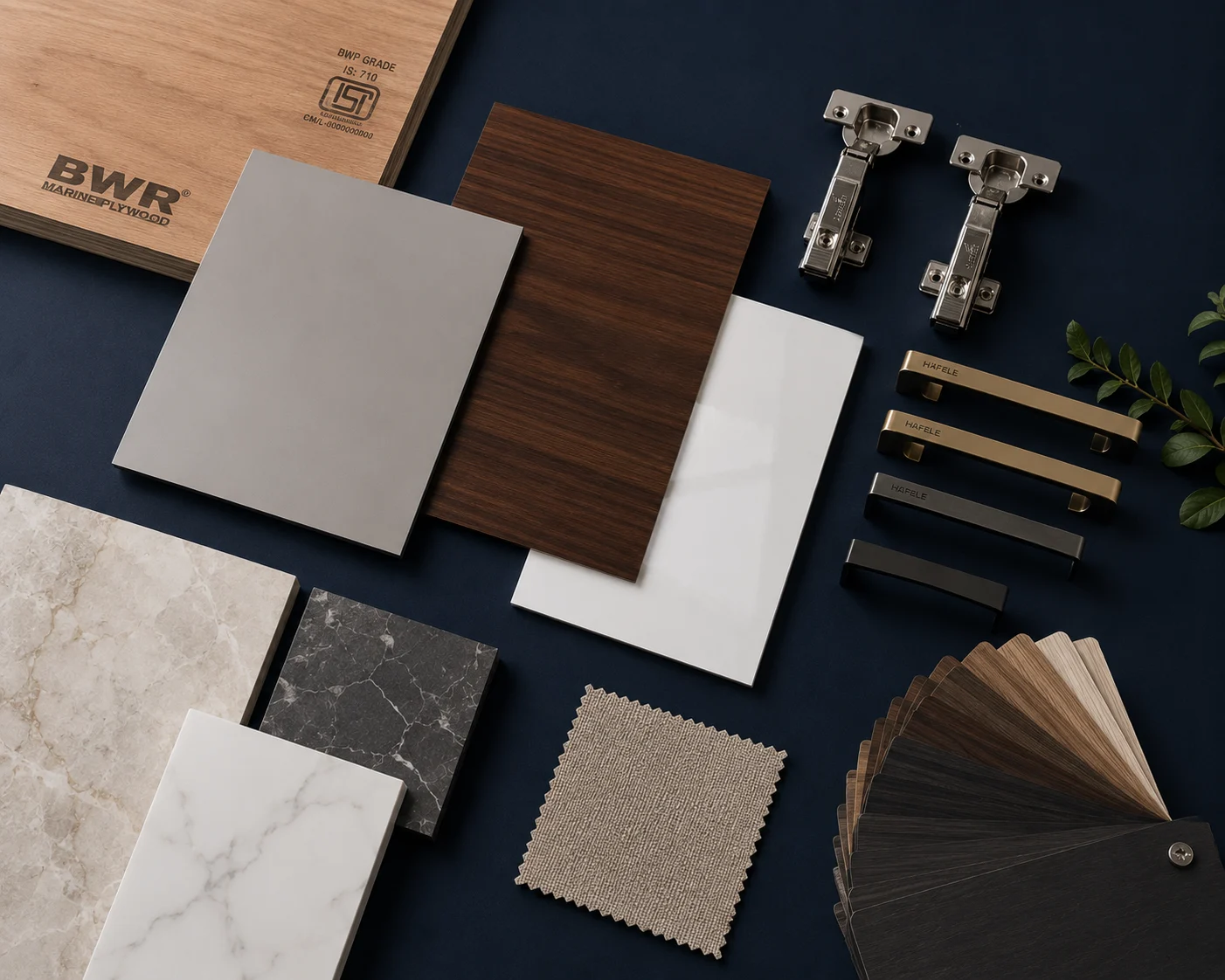
Satin brass door handles, matte black basin taps, and aged-gold pendant lights are the jewellery of a well-considered interior in 2025. Small details but genuinely high-impact: the right hardware makes an Rs.8 lakh wardrobe feel like Rs.15 lakhs. HomeOne specifies Hafele or Hettich hardware across all price tiers, with satin brass or brushed gold finishes now available from Rs.800 per fitting and delivering results that visually justify the premium.
Bonus: Smart Home Integration in Interior Design
A growing category of Chennai homeowners is asking for smart home elements designed into the interior from the start, not retrofitted afterward. Motorised curtains with scene presets, under-cabinet touch-sensor lighting, smart lock-integrated foyer consoles, and Wi-Fi-enabled AC vents are entering Chennai residential projects at the Rs.25 lakh and above tier. HomeOne now includes a smart-home consultation in the design brief for all Signature and above projects.